

Why Animals Need Fallen Leaves and Wild Spots Right Now
When the leaves fall in the fall, it’s time for a big cleanup in many gardens. Leaves are raked up, spent perennials are cut back, and flower beds are carefully cleared. What looks neat, however, is anything but ideal for many animals.
Because it’s precisely in the fall that it’s determined whether insects, hedgehogs, and other small garden dwellers will find enough places to hide for the cold season. A slightly untidy garden can become an important habitat for them.
Leaves Are More Than Just Garden Waste
Fallen leaves serve several important functions in the garden. Under hedges, shrubs, and trees, a layer of leaves provides natural protection for the soil.
It retains moisture, protects against frost, and is slowly broken down by soil organisms. In the process, nutrients are returned to the natural cycle.
At the same time, fallen leaves provide shelter for numerous small animals. Insects, spiders, beetles, and other soil-dwelling creatures find food and places to hide there.
Instead of removing all the fallen leaves, it can therefore be a good idea to leave some of them under hedges, trees, or in rarely used
Leaving corners of the garden untouched.
A winter shelter for hedgehogs
Hedgehogs, too, depend on sheltered areas. In the fall, they look for suitable places to hibernate.
A pile of dry leaves and twigs in a quiet corner of the garden can provide a valuable winter shelter. Areas under hedges or shrubs that are disturbed as little as possible are particularly suitable.
If you don’t completely clean up your garden in the fall, you’ll often create new habitats without even realizing it.
You can leave spent perennials in place
Even plants that have finished blooming don’t need to be cut back right away.
The stems of many perennials can serve as overwintering sites for insects. At the same time, some seed heads still provide food for birds.
In addition, plant parts left standing protect the soil and provide cover for small animals. For many plants, pruning can therefore wait until spring.
Clean up—but in the right places
A natural garden doesn’t mean you can’t do anything at all. Leaves can still be removed from paths and patios. Even on lawns, a thick layer of leaves shouldn’t be left lying around permanently.
What’s crucial is not to tidy up the entire garden all at once.
A pile of leaves under a hedge, a few perennials left untouched, and a wild corner can already create valuable structures.
Sometimes less is more
Nature conservation doesn’t always have to take place on large tracts of land. Private gardens, courtyards, and green spaces can also provide safe havens for animals.
Especially in densely populated areas, many small, natural spaces can together form a network of habitats.
So if you tidy up a little less in the fall, you’re not just saving yourself some work. You’re also giving numerous animals the chance to get through the cold season safely.
Sometimes a little mess is exactly what nature needs.

From a Climate Problem to a CO₂ Storage Solution? Rethinking Concrete
CO₂ becomes a component of the material
The principle is based on a natural chemical reaction.
Concrete slowly absorbs CO₂ from the environment even during its normal service life. However, new processes are designed to significantly accelerate this process in a targeted manner.
Old concrete is particularly interesting in this context.
After buildings are demolished, the concrete is crushed. This creates very large new surfaces. If these materials are treated with CO₂ under controlled conditions, some of the carbon dioxide can react with the material and be permanently bound as calcium carbonate.
This not only stores the CO₂ in the short term, but also chemically converts it into a solid mineral state.
New research highlights the potential
In July 2026, researchers investigated how fine powders derived from construction and demolition waste could be specifically used for CO₂ mineralization.
The results show a measurable storage potential: Depending on the material , recycled concrete powder was able to permanently sequester between 33.5 and 54.7 kilograms of CO₂ per metric ton of material.
Another study published in August examined carbonated fine and coarse recycled aggregates for use in new concrete. The study addresses not only CO₂ sequestration but also a crucial practical question: Can the recycled material subsequently be reused to produce high-quality concrete?
Research shows that CO₂-treated recycled materials can generally be reincorporated into new concrete mixtures.
This creates a cycle in the long run:
Buildings – Demolition – Recycling – CO₂ Mineralization – New Concrete.
Europe is also investing in the technology
Several research programs on the next generation of climate-friendly building materials are already underway in Europe.
In the EU-funded C-SINC project, researchers and companies from several European countries are working on novel binding agents. The goal is to use magnesium silicates to permanently bind CO₂ in mineral form.
The goal goes well beyond traditional recycling: The aim is to replace some of the conventional cement with materials that absorb CO₂ during their production.
The project is receiving approximately 4 million euros in funding.
At the Karlsruhe Institute of Technology, too, such concrete components are already being tested for load-bearing capacity, durability, and safety.
Why Cement Is the Real Problem
Concrete consists mainly of sand, gravel, water, and cement. Cement, in particular, poses a problem in terms of climate impact.
In the production of cement clinker, limestone is heated to very high temperatures. This process generates emissions not only from the energy required.
A significant portion of the CO₂ is produced directly as a result of the chemical conversion of limestone.
That is why the problem cannot be solved simply by powering cement plants with renewable energy.
New binding agents, less cement per cubic meter of concrete, recycling, and CO₂ mineralization must all work together.
Not a miracle cure—but it has enormous potential
That is why concrete does not automatically become a climate-neutral building material.
A recent scientific study from July 2026 even warns against overestimating the natural CO₂ absorption of existing concrete structures. It is nowhere near enough to offset the emissions from cement production.
That is precisely why technical processes that specifically accelerate mineralization while simultaneously producing recycled material for new building materials are of interest.
The key question now is whether these processes can be implemented economically and on an industrial scale.
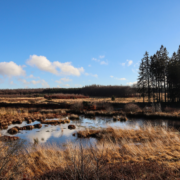
Bogs—the natural air conditioners of our landscape
A natural water reservoir
Intact wetlands function much like a sponge. During heavy rainfall, they absorb water and retain it in the landscape. This ensures that moisture remains available for longer during dry periods.
At the same time, the evaporation of water has a cooling effect on the immediate surroundings. Wetlands can thus help make landscapes more resilient to heat and drought.
They also play an important role during heavy rain because the water does not drain away immediately but is partially retained.
Blinklingmoos shows what renaturation can achieve
In the Blinklingmoos near Strobl on Lake Wolfgang, the natural water balance has been restored over the years. Former drainage ditches were filled in, and water is now retained in the marsh again.
The difference becomes especially apparent during dry periods: Even though the surface may appear dry, moisture is retained in the restored bog beneath it.
Austria Is Bringing Its Peatlands Back to Life
LIFE AMooRe – Austrian Moor Restoration is currently Austria's largest bog restoration project.
By 2033, measures to restore water levels and renature approximately 1,400 hectares of peatlands are to be implemented. About 40 peatland areas in all nine federal states are part of the project.
A total of 44.23 million euros has been allocated for this purpose.
There is a great need for action: Austria has approximately 44,000 hectares of peatlands. More than 90 percent of these have been adversely affected by past drainage efforts.
Small Spaces with a Big Impact
Wetlands cover only a small portion of our landscape, yet they serve several important functions at the same time.
They store water and carbon, provide habitat for specialized animal and plant species, and can help mitigate the effects of extreme weather events.
The restoration of wetlands thus demonstrates in very concrete terms what modern climate and nature conservation can achieve: restoring natural systems to full functionality and making our landscape more resilient.
The Blinklingmoos on Lake Wolfgang is a good example of this.
Sometimes part of the solution lies right under our feet.

Can biotechnology save endangered species?
Climate change is altering habitats at a pace that many animal and plant species can barely keep up with. New diseases are spreading, periods of drought are becoming more frequent, and entire ecosystems are coming under pressure. Traditional conservation efforts aim to preserve habitats, stabilize populations, and reduce harmful impacts. But what happens when these measures alone are no longer enough?
In the United Kingdom, researchers are currently exploring an approach that has so far been used primarily in medicine and agriculture: biotechnology may help wild species become more resilient to diseases and changing environmental conditions.
The British research agency ARIA (Advanced Research and Invention Agency) is providing approximately 54 million pounds for this purpose. As part of the “Accelerated Adaptation” program, various research teams are investigating how the natural adaptability of species can be specifically supported or accelerated.
Making Trees More Resistant to Disease
One focus of the research is on Europe's forests. This is because, in addition to rising temperatures and increasing drought, introduced and emerging pathogens are also taking a toll on many tree species.
Several research groups are therefore investigating how trees could be better protected against fungal diseases. One project, for example, is developing an RNA-based approach designed to target specific pathogens. Another research effort is exploring whether even mature trees can be made more resistant after the fact.
Increasing drought is also a factor. Researchers at the Royal Botanic Gardens, Kew, are investigating whether seeds can be treated in such a way that the resulting trees are better able to withstand prolonged periods of drought.
Help for Amphibians and Pollinators
It's not just plants that could benefit from these new technologies. Unconventional approaches are also being explored when it comes to animals.
One project focuses on amphibians and the dangerous chytrid fungus, which threatens numerous populations of frogs, toads, and other amphibians worldwide. The project is investigating whether genetically modified microorganisms applied to the animals’ skin can improve their resistance to the infection.
Other research teams are focusing on pollinators. Among other things, they are investigating ways to better protect wild pollinators against viral diseases. Given their importance to the reproduction of numerous wild and cultivated plants, such developments could have implications far beyond the protection of individual species.
Even moors and coastlines could benefit
However, the research is not limited to well-known animal and tree species. It also focuses on unassuming plants that are crucial to entire ecosystems.
Sphagnum mosses, for example, form an essential foundation for many peatlands. These ecosystems can store large amounts of carbon over long periods of time. A research project is therefore investigating how sphagnum mosses could be made more resilient to changing climatic conditions.
Another approach focuses on beach grass. The plant stabilizes sand dunes and thus contributes to natural coastal protection. Researchers want to find out whether its adaptation to changing environmental conditions can be accelerated.
To what extent should we interfere with nature?
In the future, targeted biotechnological interventions could prevent individual populations from collapsing due to disease, heat, or drought. At the same time, natural ecosystems are highly complex. Changes to one species can have an impact on other species and, consequently, on entire food chains.
A particularly difficult question in this context is how to assess potential long-term consequences. While many biotechnological processes can be studied under controlled conditions, the situation in the natural environment is much more complex.
ARIA takes these uncertainties into account and, in addition to biological research, also funds work on modeling, data validation, ethics, and governance. This is because, before such technologies are actually deployed in the natural environment, their potential consequences must be carefully examined.

Renewable Energy Around the Clock
No single technology solves the problem—it’s their interaction that does
A modern energy system is not based solely on wind turbines or solar panels. The key lies in the interaction of various components:
- Solar power provides affordable electricity during the day.
- Wind power often generates a particularly large amount of energy in the evening and at night.
- Battery storage systems offset short-term fluctuations.
- Pumped-storage power plants store excess energy over long periods of time.
- Green hydrogen can store seasonal surpluses and make them available for use later.
- Smart grids distribute energy to where it is needed at any given moment.
It is precisely this combination that makes a stable and reliable power supply possible—even when individual energy sources temporarily produce less power.
What happens during a “dark lull”?
A "dark calm" refers to weather conditions in which there is little sunshine and only light winds for several days.
However, the study shows that such situations do not pose an insurmountable problem. By combining different storage technologies, Europe-wide interconnected power grids, and more flexible energy use, even these periods can be reliably bridged. This refutes one of the most common objections to renewable energy.
Digitalization is becoming a decisive factor
In addition to wind and solar energy, digitalization is becoming increasingly important.
Modern energy management systems can coordinate electricity consumption and generation in real time. For example, electric cars tend to charge when there is a particularly high amount of solar power available. Battery storage systems store excess energy and release it exactly when it is needed.
This makes the entire energy system more efficient and stable.

When the driest desert in the world begins to bloom
One of the driest regions on Earth is currently transforming into a vast sea of flowers. In the Atacama Desert in northern Chile, millions of plants are sprouting from the otherwise nearly barren soil following exceptionally heavy rains.
This rare natural phenomenon is called the “Desierto Florido” — the flowering desert — in Chile. In 2026, the bloom could cover a particularly large area.
Buried in the ground for years—and suddenly awakened
Beneath the surface of the Atacama lie the seeds and bulbs of about 200 different plant species. Many of them can survive long periods of drought and wait for sufficient moisture before they germinate.
These very conditions have now come to pass. Exceptionally heavy rainfall has literally shaken up parts of the region.
In some areas, more than 180 millimeters of precipitation were recorded this winter. César Pizarro of the Chilean Forestry Commission (CONAF) described these amounts as exceptionally high and unprecedented in this form.
The extra water seeps into the desert soil, creating the conditions that allow countless seeds to germinate almost simultaneously.
Up to 15,000 hectares could be in bloom
Purple, white, yellow, and pink flowers now cover large areas. Typical varieties include the purple “Pata de Guanaco” and the white “Suspiros,” among others.
According to Chilean authorities, the bloom could cover an area of up to 15,000 hectares in 2026. It is expected to peak in October.
That is equivalent to an area of about 21,000 soccer fields and illustrates just how vast this rare natural phenomenon can be.
A natural spectacle with two sides
The extraordinary rainfall doesn't just make for spectacular images. At the same time, heavy rain can cause significant damage in Chile's arid regions.
Thus, the blooming Atacama reveals two sides of extraordinary rainfall events: on the one hand, they can bring life back to a seemingly lifeless landscape, but on the other hand, they can also endanger people and infrastructure.
What is particularly fascinating is the plants’ remarkable resilience. For long periods of time, the soil appears to be virtually lifeless. In fact, beneath the surface, an entire biological reservoir lies in wait for the right conditions.
If there is enough water, a new life cycle begins within a short time. Plants germinate, bloom, and produce new seeds, which in turn can survive long dry spells in the soil.
The blooming Atacama is thus not only a spectacular natural phenomenon; it also demonstrates the strategies life uses to adapt to even the most extreme environmental conditions.
New Rules Against Greenwashing
Terms such as “climate-neutral,” “environmentally friendly,” and “sustainable” have long since become key selling points. However, it is not always clear what such claims actually mean.
New rules are intended to change that and ensure that environmental advertising becomes more understandable, verifiable, and credible in the future.
Since September 27, 2026, stricter requirements for environmental and sustainability claims have been in effect in Austria. These requirements are based on the European EmpCo Directive, which was implemented in Austria through, among other measures, amendments to the Federal Act Against Unfair Competition.
General terms are no longer sufficient
General terms such as “green,” “ecological,” or “environmentally friendly” should not be used lightly without a verifiable basis.
When making general environmental claims, companies must be able to demonstrate recognized excellence in environmental performance. What matters here is not just a single component of a product, but also the overall impression conveyed by advertising, packaging, or presentation.
Even colors, images, or symbols can play a role. A green leaf, a drop of water, or a design with a strong connection to nature can also be perceived as an environmental statement under certain circumstances.
"Climate-neutral" is becoming much more difficult
Statements regarding climate neutrality are particularly affected.
A product may not be advertised as “climate-neutral,” “CO₂-neutral,” or using similar terms if this claim is based solely on the fact that emissions outside the company’s own value chain are offset through CO₂ credits or other offset measures.
The reason for this is that consumers might get the impression that the product itself produces no emissions or significantly fewer emissions.
Companies may continue to provide information about climate protection projects or investments in carbon offsets. However, the presentation must not give the impression that this makes the product itself emission-free.
Greater Clarity on Sustainability Labels
Environmental and sustainability labels are also subject to stricter regulations.
In recent years, a wide variety of such labels have emerged. Some are based on independent testing, while others were developed by the companies themselves.
In the future, sustainability labels may generally be used only if they are based on a certification system or have been established by a government agency. This is intended to significantly restrict the use of self-created labels that lack such a basis.
This should make it easier for consumers to determine whether an eco-label is actually based on defined criteria and a transparent testing process.
Promises about the future must also be reliable
Many companies set goals such as “climate neutral by 2040” or “net zero by 2050.”
Such statements are, in principle, possible. However, they must not consist solely of a general declaration of intent.
Environmental claims regarding future performance must be based on clear, objective, and verifiable commitments. These include measurable goals, a transparent implementation plan, and regular reviews by independent experts.
This turns a promise for the future into a more verifiable commitment.
An Opportunity for Credible Companies
The new rules do not mean that companies are no longer allowed to talk about sustainability.
Those who conserve energy, reduce emissions, design products to be more durable or repairable, or increase the reuse of materials can continue to communicate these achievements.
What matters most is how specific and clear a statement is.
For companies that already document and transparently report their environmental performance, this can actually be an advantage. They don’t have to compete as much with rivals who communicate sustainability primarily through buzzwords or self-created labels.
Sustainability Requires Credibility
Greenwashing doesn't just affect individual purchasing decisions. When nearly every product can be labeled as "green," "sustainable," or "climate-neutral," such terms lose their meaning.
This also harms companies that are actually investing in climate protection, the circular economy, or more sustainable production methods.
The new rules do not yet create a sustainable economy. However, they do change the conditions under which the topic can be discussed.
When environmental promises become more transparent and verifiable, concrete progress will once again carry more weight than a "green" label.
Europe's oceans are changing dramatically
The Hottest Summer Since Satellite Records Began
Recent analyses show that Europe’s oceans experienced their hottest summer in 2026 since satellite records began in 1982.
The trend in the Bay of Biscay is particularly striking. There, 186 days of marine heatwaves had already been recorded by the end of August. The Mediterranean Sea was also affected by exceptionally high temperatures for months.
As early as the end of June, the European Earth observation service Copernicus had detected temperature deviations of up to 6 °C from the long-term average in the western Mediterranean. Marine areas off the coast of southern France and along Italy’s western coast were particularly affected.
When Underwater Forests Disappear
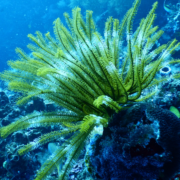
Global warming has far-reaching ecological consequences. Off the coast of northern Spain, around 95% of the original kelp forests have already disappeared in some areas.
These fascinating underwater forests provide food, shelter, and important refuges for numerous marine animals. Their loss affects entire communities, including lobsters, crabs, and sea urchins.
At the same time, the ranges of various fish species are shifting. While heat-loving species are expanding into new regions, others are increasingly losing their traditional habitats.
An ocean with ever-decreasing oxygen levels
Rising temperatures are changing not only habitats but also the physical and chemical properties of the water.
Warmer seawater can hold less dissolved oxygen. At the same time, many marine organisms have an increased need for oxygen. This becomes particularly problematic in coastal areas, where additional nutrient inputs are already disrupting the ecological balance.
Marine heat waves can also promote the growth of certain algae and permanently alter sensitive ecosystems.

How Europe's Cities Are Reclaiming Their Streets – Mobility for Livable Urban Spaces
Paris: Streets Are to Be Transformed into Green Spaces
This transformation is particularly evident in Paris. For years, the city has been focusing on bike lanes, traffic-calmed school zones, and more green spaces along its streets.
In a public survey conducted in March 2025, approximately 66 percent of participants voted in favor of greening an additional 500 streets and redesigning them for pedestrian traffic. This is a development goal, not a measure that has already been implemented. The low turnout also shows that approval in a survey does not automatically mean there is a broad social consensus.
Nevertheless, the direction is clear: Fewer impervious surfaces and more trees are intended to do more than just change the cityscape. They can provide shade, absorb rainwater, and help alleviate the summer heat locally.
Barcelona: Neighborhoods Instead of Through-Traffic Corridors
Barcelona is taking a similar approach with its “superblocks” and green street corridors. Through traffic is restricted, while access for residents, deliveries, and necessary trips is to be maintained.
In the densely built-up Eixample neighborhood, sections of four streets—including Consell de Cent—have been transformed into green corridors. New plazas, trees, and seating areas are changing how the street space is used there: people can meet up, children have more room to play, and walking has become more pleasant.
The point isn't to make every street completely car-free. What matters is which traffic is actually necessary—and which is simply using a neighborhood as a shortcut.
Ghent: Through traffic will be rerouted
The Belgian city of Ghent shows that even changes to traffic routing can make a big difference. Since 2017, a traffic plan has divided the city center into several zones. Drivers who want to travel between these zones are generally routed via the ring road instead of driving straight through the city center.
The center will remain accessible. At the same time, it will be more difficult to use it as a through route. Direct connections for pedestrians and cyclists will remain in place.
The principle behind it is simple: A city can accommodate necessary car trips without giving all its streets over to through traffic.
Reducing traffic requires good alternatives
Changes like these don't happen on their own. If cars are simply pushed onto neighboring streets, the problem is merely shifted elsewhere. Without reliable bus and train service or safe bike lanes, everyday life becomes more difficult for many people.
Delivery drivers, caregivers, people with limited mobility, and commuters must also be taken into account. For local businesses, it’s not just the number of parking spaces that matters, but whether customers can easily access them. Whether a renovation will boost retail must be assessed on a case-by-case basis—blanket promises of success are just as unhelpful as blanket rejection.