
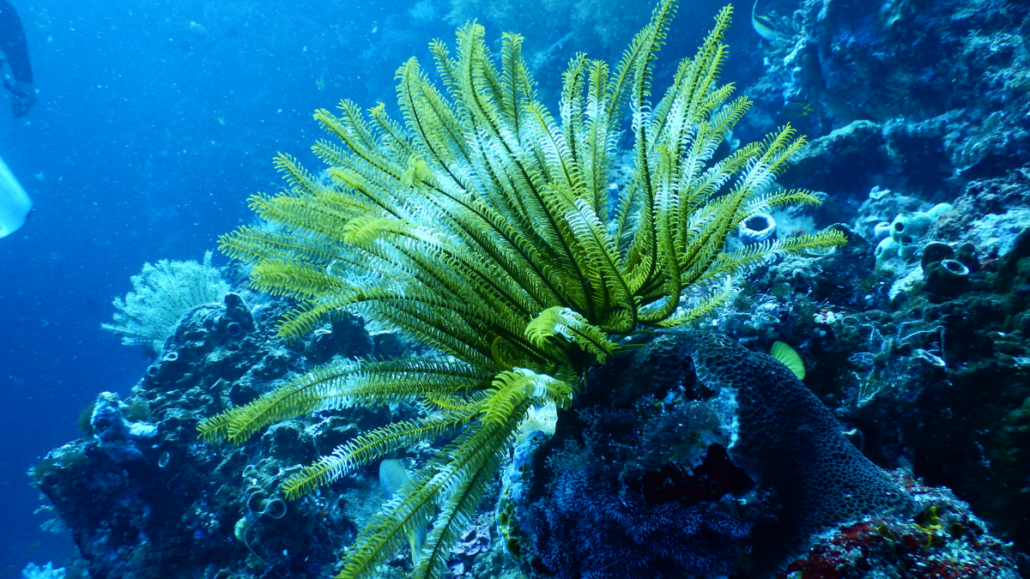
Europe's oceans are changing dramatically
Europe's oceans are changing dramatically
While heat waves are immediately noticeable on land, a change is taking place beneath the water’s surface that receives far less attention. Europe’s oceans are getting warmer. Marine heat waves are altering the living conditions for fish, corals, seagrass beds, and numerous other marine organisms.
The Mediterranean Sea is particularly affected. But rising water temperatures are also leaving a clear mark on the North Atlantic and European coastal waters. The consequences extend far beyond individual species: entire food chains, fish stocks, and sensitive marine habitats are coming under pressure.
The Hottest Summer Since Satellite Records Began
Recent analyses show that Europe’s oceans experienced their hottest summer in 2026 since satellite records began in 1982.
The trend in the Bay of Biscay is particularly striking. There, 186 days of marine heatwaves had already been recorded by the end of August. The Mediterranean Sea was also affected by exceptionally high temperatures for months.
As early as the end of June, the European Earth observation service Copernicus had detected temperature deviations of up to 6 °C from the long-term average in the western Mediterranean. Marine areas off the coast of southern France and along Italy’s western coast were particularly affected.
When Underwater Forests Disappear
Global warming has far-reaching ecological consequences. Off the coast of northern Spain, around 95% of the original kelp forests have already disappeared in some areas.
These fascinating underwater forests provide food, shelter, and important refuges for numerous marine animals. Their loss affects entire communities, including lobsters, crabs, and sea urchins.
At the same time, the ranges of various fish species are shifting. While heat-loving species are expanding into new regions, others are increasingly losing their traditional habitats.
An ocean with ever-decreasing oxygen levels
Rising temperatures are changing not only habitats but also the physical and chemical properties of the water.
Warmer seawater can hold less dissolved oxygen. At the same time, many marine organisms have an increased need for oxygen. This becomes particularly problematic in coastal areas, where additional nutrient inputs are already disrupting the ecological balance.
Marine heat waves can also promote the growth of certain algae and permanently alter sensitive ecosystems.
These changes also affect us humans.
What happens underwater has consequences for life on land. Changes in fish populations affect fisheries; rising water temperatures can facilitate the spread of certain pathogens; and warmer ocean surfaces release additional energy and moisture into the atmosphere.
The European Environment Agency anticipates that marine heatwaves in European seas will continue to increase in frequency, duration, and intensity in the future.
This trend makes it clear: Climate change is not only altering landscapes, forests, and glaciers. Beneath the water’s surface, too, Europe’s natural environment is undergoing profound changes—with consequences whose full extent cannot yet be foreseen.
What effects can marine heat waves have on the ecosystems of Europe's seas?
You can answer this question. Sign in to earn points.